



Cyril Ramaphosa’s 2026 State of the Nation Address delivers a political balancing act, addressing diverse interests while avoiding contentious issues, showcasing the art of subtle governance.
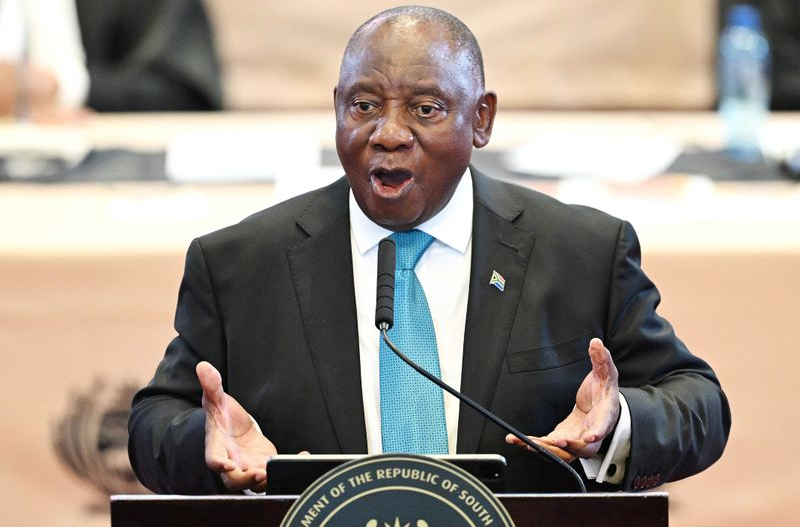
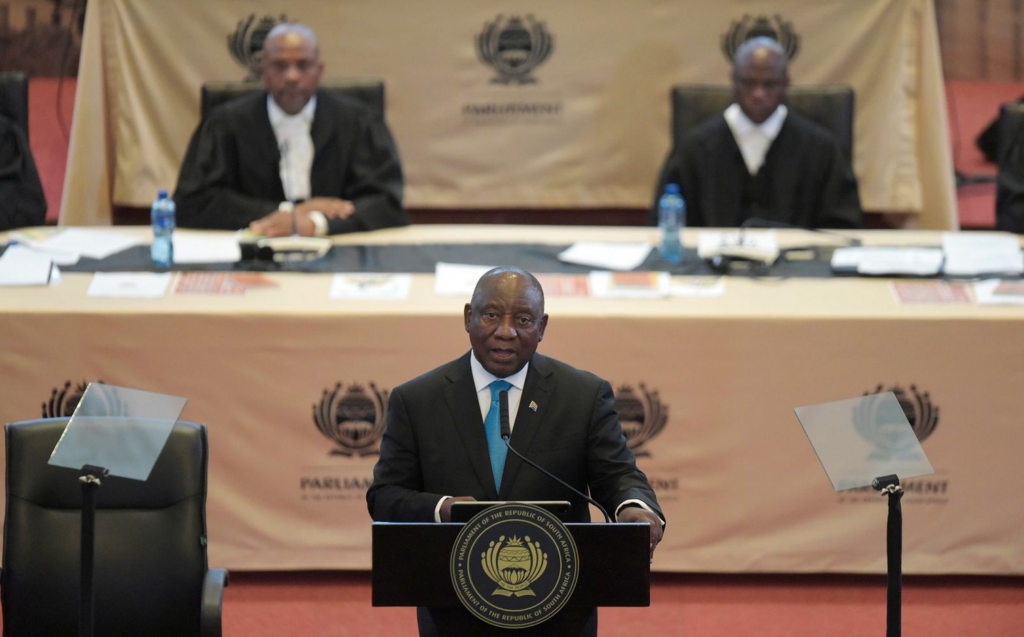
Cyril Ramaphosa’s 2026 State of the Nation Address (Sona) was many things: long, densely packed, administratively ambitious. But above all, it was politically shrewd. This was a Sona designed to send at least one carefully calibrated signal to almost every constituency in the country.
For populists: army boots on the ground and drones on the borders.
For the ANC loyalists: The developmental state remains intact, state ownership preserved.
For free-marketeers: Rail access, port concessions, tax incentives and commercial courts.
Army boots and hard borders
Let’s begin with the populists, because they received their dopamine hit early.
If your political appetite is whetted by the sight of soldiers on city streets, Ramaphosa had you at “deploying the South African National Defence Force”.
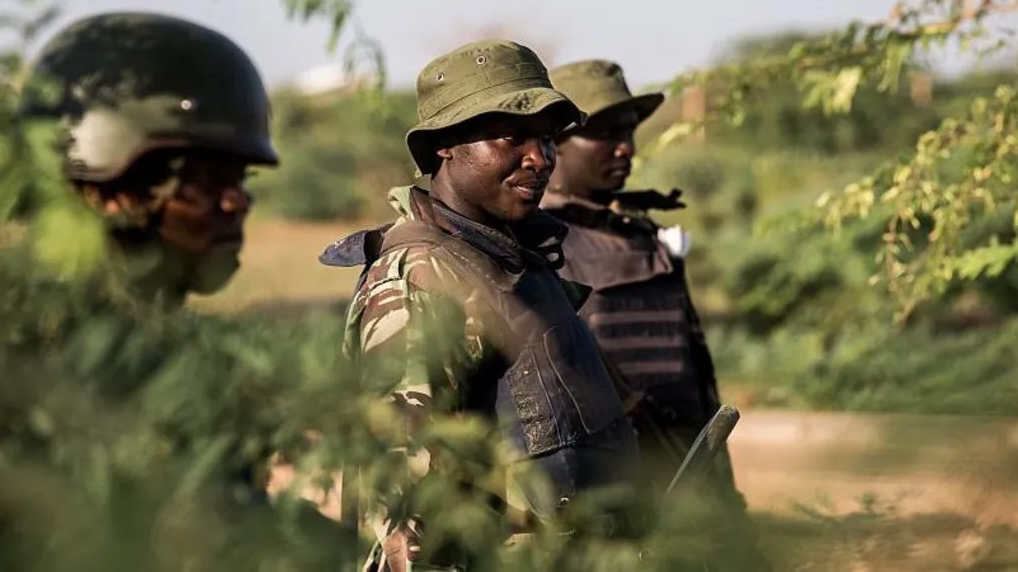
The army will be sent out — within days, Ramaphosa seemed to suggest — to the Cape Flats to combat gang violence and to Gauteng to deal with illegal mining.
Actual crime experts will suggest this intervention cannot make a long-term dent in rates of violence. Lefties will be horrified by the potential misuse of powers by soldiers with little experience in domestic policing.
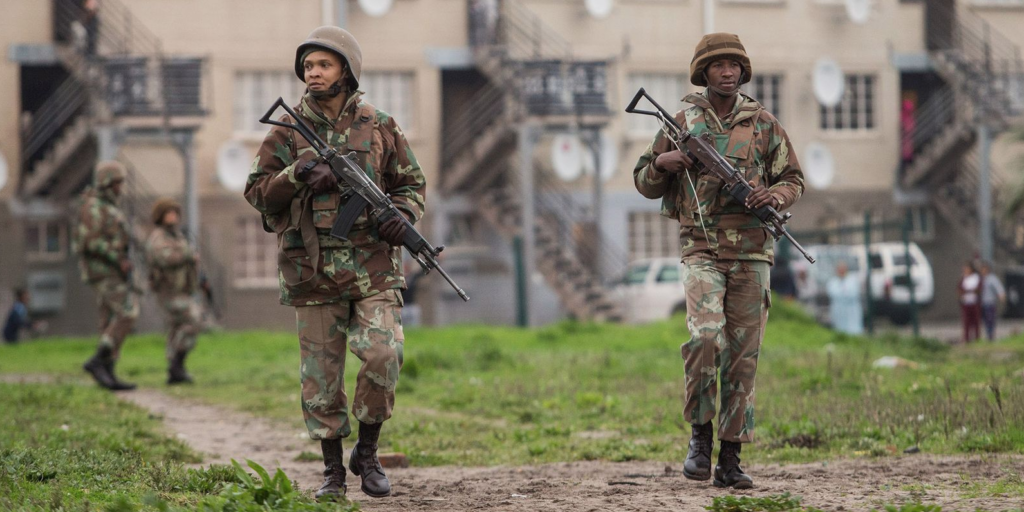
But many who live in the affected communities will be welcoming and relieved, and the strongmen who yearn to see the state stamp greater authority on wayward civilians will, perhaps, be temporarily satisfied.
The army deployment is illustrative of Sona 2026’s decisive rhetorical escalation on crime, the topic to which Ramaphosa devoted the greatest prominence and urgency.
Unsurprisingly, given the revelations at the Madlanga Commission, organised crime was placed top of the list as “the most immediate threat to our democracy”, an unprecedented framing that shifts crime from a social ill to a democratic crisis.
The proposed approach is arguably too intelligence-led, in a country where Crime Intelligence has been deeply compromised in recent years: a new national illicit economy disruption programme targeting tobacco, fuel, alcohol and counterfeit goods; data analytics and AI to identify syndicates.
A welcome intervention, except if it’s carried out by equally compromised state spooks: complete revetting of senior police management with lifestyle audits.
On immigration, the speech delivered what was by some margin the most muscular language on immigration of any Sona this decade.
Ten thousand additional labour inspectors. Drones along the border. Public-private partnerships to redevelop key ports of entry. And, most pointedly, “Employers that hire foreign nationals without the required visas will face the full might of the law.”
It’s a far cry from the more conciliatory immigration rhetoric of previous years.
Read more: IN FULL: President Ramaphosa’s 2026 State of the Nation Address
For the ANC faithful: the Development State lives
For those who feared the Government of National Unity (GNU) might mean abandoning the party’s ideological commitments, Ramaphosa offered plenty of reassurance.
State ownership is in no danger of going anywhere, Ramaphosa indicated. Private rail operators are welcomed — but within a concession model that “preserves public ownership while mobilising private investment and expertise”. Port partnerships are framed the same way. Energy reform promises a “level playing field,” but not privatisation.
Even the new State Property Company — tasked with transforming 88,000 buildings and five million hectares of land into “professionally managed engines of growth and development” — is not an act of market liberalism. (If you need convincing of this, it appears to have been first punted by DA Public Works Minister Dean Macpherson in mid-2024). It is an attempt to professionalise state ownership, rather than relinquish it.
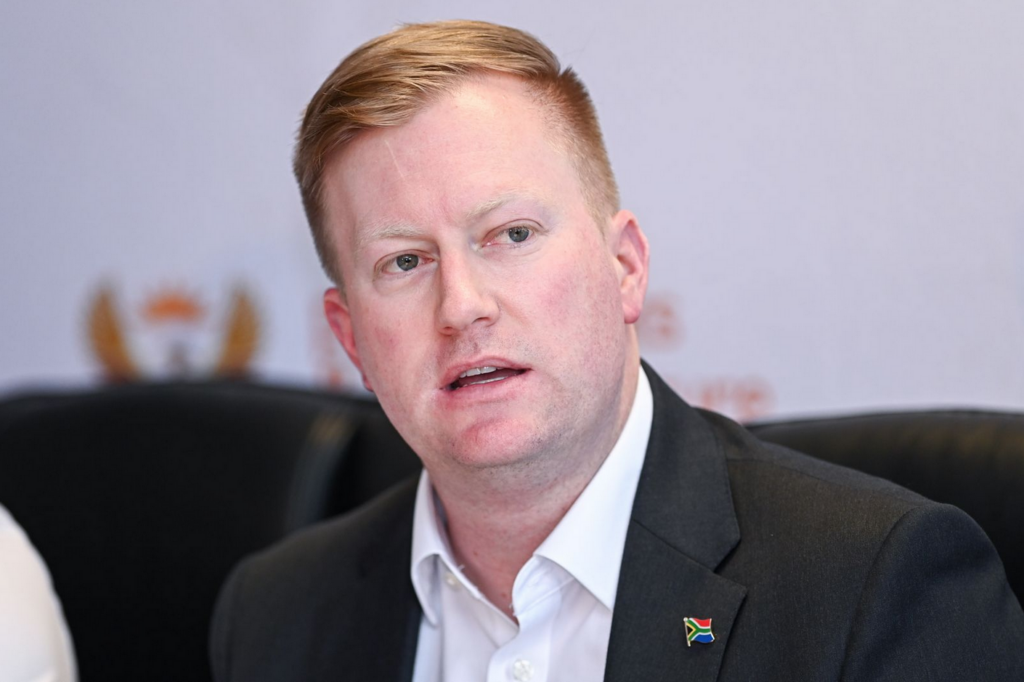
Black Economic Empowerment as a concept still remains the ideological spine of this government. It will be “refined” and “realigned”, said Ramaphosa, but also “strengthened”.
A R20-billion-per-year transformation fund will channel R100-billion over five years specifically to black-owned businesses. Employment equity targets for persons with disabilities will reach 7% by 2030, with a matching 7% procurement preference.
There’s a clear message here to those who hoped the GNU might dilute transformation: don’t hold your breath.
Even the National Health Insurance got its obligatory mention, albeit without details or time frames: “This year, we will proceed with the preparatory work for the establishment of the NHI,” said the President.
Still coming, still happening, still state-led, until further notice.
The free-marketeers got their breadcrumbs
Here’s where Ramaphosa’s balancing act got interesting. While maintaining the developmental state framework, he has now opened unprecedented space, by the standards of an ANC president, for private sector participation in energy, rail and ports.
High-speed rail, apparently Ramaphosa’s passion project, is also back on the agenda — and has moved from framework to request-for-proposals stage, with nearly 30 companies interested.
There’s a 150% tax deduction for electric vehicle investment from March. The skills development levy returned to employers is increased to 40%. Business licensing regulations will “make it easier, not harder, to start and run a small business” — surely music to the DA’s ears.
The White Right: A deafening silence
Which brings us to the losers of the evening: the AfriSol lobby for the white right.
The 2026 Sona will be remembered in certain circles as the evening this grouping discovered it has no clothes.
Consider the checklist of demands they have prosecuted with messianic zeal over the past five years: the repeal of the Expropriation Act; the classification of farm murders as a priority crime; the presidential condemnation of the “Kill the Boer” chant; the rollback of firearm licensing restrictions.
Now consider the scorecard.
Ramaphosa played a clever game on the topic of redress, with not one mention of the Expropriation Act. Instead, the President focused on the District Six restitution project. Land reform continues, it was made clear, but it will be restitutive rather than confiscatory, and it will happen in the Cape Town City Bowl, under court supervision, with chequebook attached. This is the GNU’s compromise made manifest, but it’s unlikely to satisfy a paranoid AfriSol.
Farm murders? The crime section is the longest and most detailed of the address. It mentions gang violence in the Western Cape, illegal mining in Kagiso, construction site extortion, counterfeit goods and the corruption exposed by the Madlanga Commission.
It does not, at any point, mention farmers. Rural safety is not a category. Agricultural crime is not mentioned as a priority.
The community that AfriForum insists is uniquely victimised is, in the President’s framing, merely part of the general population affected by organised syndicates.
You can forget about the “Kill the Boer” chant: Ramaphosa was never going to mention it.
And then there are the guns.
“We are going to tackle gun crime by streamlining legislation and regulations on licensing, possessing and trading in firearms and ammunition. We will increase enforcement of existing gun laws,” said Ramaphosa .
This is not the blanket civilian disarmament AfriForum’s apocalyptic fundraising emails have warned of. It is worse, for their purposes: it is sensible, in that it acknowledges that the problem is not licensed farmers but illegal firearms flowing through corrupt supply chains. There is no rhetorical enemy here for the base to mobilise against.
On sovereignty — a hot-button issue after AfriSol’s Washington lobbying — Ramaphosa was pointed: “In a world where powerful nations often assert their dominance and influence over less powerful states, our country’s commitment to sovereignty and self-determination is sacrosanct. It is not negotiable… We will not be bullied by any other country.”
In other words: we’re not changing our laws to please Elon Musk or Donald Trump.
The vanishing issues
But it would be a mistake to characterise the 2026 Sona merely as a catalogue of who won and who lost. More striking, perhaps, is what has disappeared.
Remember the Fourth Industrial Revolution? For a brief, heady period 4IR was positioned as South Africa’s economic salvation: a R4-trillion opportunity, a chance to “build a Silicon Valley in South Africa” (Sona 2019). Digital economy summits were held and presidential commissions established.
In 2026, 4IR receives exactly one glancing mention.
“The digital and the green economy,” said Ramaphosa, are “where young people will find employment opportunities.”
That is it. No transformation of the economic paradigm. Digitisation now is purely administrative: Digital ID, online police statements, Smart IDs at bank branches. The revolution has been downgraded to customer service.
What has replaced 4IR is the green economy — and here Ramaphosa’s language is unmistakably the breathless hype once reserved for technology.
“The biggest opportunity of all lies in green growth,” said the President.
Climate change, despite catastrophic flooding in Limpopo and Mpumalanga that killed 45 people just weeks ago, gets framed almost entirely through an economic lens.
It’s now about jobs in renewable energy, green hydrogen, and electric vehicles, not about existential threats or climate emergency. The flooding got a brief mention, but climate change has been successfully repackaged as an economic opportunity rather than a civilisational crisis.
Gender-based violence (GBV) has suffered a similar demotion.
In previous years, GBV occupied the moral high ground of the Sona, treated as a national emergency requiring extraordinary measures.
In 2026, it is present — the government will “scale up survivor-centred support” and “mobilise all sectors of society” — but the urgency has evaporated. There were no new funding announcements, numerical targets, timelines or novel interventions. GBV has been normalised.
The emergencies of the moment, Sona made clear, are water and organised crime.
The genius of the 2026 Sona is that it gives almost everyone something small to applaud, while committing the government to almost nothing that would alienate its coalition partners. Land reform continues, but through restitution, not expropriation. State ownership continues, but with private participation. BEE continues, but with a review that might, eventually, produce something more efficient.
Cyril Ramaphosa has been President for eight years. He has survived State Capture, a pandemic, insurrection, and load shedding. He has learned that in a Government of National Unity, the art of survival is to give a little something to (almost) everyone.
Participants in the 1956 Women’s March, which Ramaphosa began his speech commemorating, famously stood in silence.
Ramaphosa, in 2026, has perfected a different kind of silence: the silence of omission, of strategic ambiguity, of refusing to pick fights he cannot win. DM
In an age of information overload, Sunrise is The Namibian’s morning briefing, delivered at 6h00 from Monday to Friday. It offers a curated rundown of the most important stories from the past 24 hours – occasionally with a light, witty touch. It’s an essential way to stay informed. Subscribe and join our newsletter community.

The Namibian uses AI tools to assist with improved quality, accuracy and efficiency, while maintaining editorial oversight and journalistic integrity.
Stay informed with The Namibian – your source for credible journalism. Get in-depth reporting and opinions for
only N$85 a month. Invest in journalism, invest in democracy –
Subscribe Now!