



The World talks about the need for a just energy transition (JET).
But what could or should JET look like in Namibia?
I work in the green hydrogen (GH2) and green industrialisation space.
Oftentimes, I am asked by journalists and representatives from civil society organisations how it can be “just and fair” to export a source of energy when 50% of Namibians have no connection to the electricity grid.
It is a fair question that has a reasonably simple answer.
Not all energy sources are suited for the power grid, and access to electricity is more closely tied to the power distribution infrastructure than to the source of power.
The power grid in Namibia is not currently ‘green’ or ‘clean’. Much of the electricity transmitted on Namibia’s grid (some 45%) is generated by coal-powered stations in South Africa, which emit greenhouse gases (GHG).
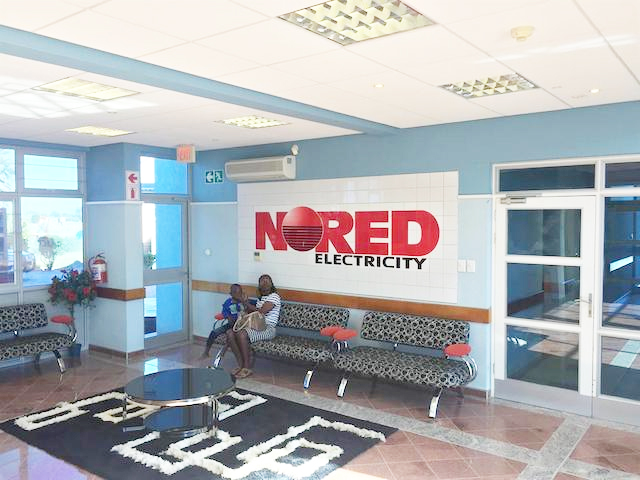
Namibia’s power grid does not reach many corners of the country, and only 20% of households in remote rural areas are connected to the grid. With more than a quarter of all households living in high-density areas, only 70% of urban households are connected to the grid.
In this context, JET would then require a greening and expansion of the grid or, alternatively, the provision of reliable, off-grid renewable energy installations for low-population-density settlements in rural areas and high-density urban informal areas.
Initially, the aim was to achieve universal access by 2030. However, due to cost, technical capacity and logistical challenges, the government had to shift this target to 2040.
Connecting about 432 000 existing and future households to electricity to achieve universal access is a mammoth task estimated to require over N$13 billion.
Breaking this down further, how can we finance this?
We can set aside funds from current tax revenue, promote public-private partnerships and request grants and concessional funding from our donors.
Additionally, we can grow the economy by bringing new sectors such as green industries and oil and gas online.
These options have their own merits and are not mutually exclusive.
To expand the economic pie by creating new economic sectors is an attractive solution but has its own challenges. The oil and gas sector may contribute to GHG emissions and potentially alter Namibia’s net carbon sink status, depending on investment and activity in the GH2, green industrialisation and renewable energy sectors.
The sizeable investments in this sector are likely to bring symptoms of the ‘Dutch Disease’, whereby oil dollars create inflationary pressure, adversely impacting the purchasing power of Namibians outside the oil and gas sector.
Furthermore, access to decarbonisation and green funding sources may be curtailed. Equally, taxes and royalties will boost state revenue.
The GH2 sector will further reduce the carbon footprint of Namibia and that of countries that will import and use our GH2 and its derivatives.
Leapfrogging into clean industrialisation will avoid CO2 emissions.
Namibia is likely to attract more decarbonisation and green funding, as well as tax, land lease and concession fees and royalties, which will strengthen the fiscus.
At the same time, inflationary pressure can also be expected from large projects in this sector, like those in the oil and gas sector.
What is clear is that neither the oil and gas sector nor the GH2 sector plays an immediate or direct role in the nation’s electrification to achieve universal access to electricity.
Should our offshore gas be used for gas-to-power generation and excess renewable energy from GH2 projects be evacuated into the Namibian power grid, the impact is likely to be mixed.
More home-grown electricity will likely be available at a lower cost compared to imports.
Electricity from gas and renewables instead of electricity produced from coal will ‘green’ the grid, but will not achieve a 100% green status since gas emits CO2, albeit less than coal.
Green financing may be curtailed, and goods produced using grid power will be less competitive than goods produced with fully ‘clean’ energy.
Access to South African and European Union markets will be constrained with the tightening of the South African carbon tax regime and the introduction of the Carbon Border Adjustment Mechanism in Europe.
Should offshore oil be refined on Namibian soil, promising synergies with the GH2 sector may be realised.
GH2 can replace the grey hydrogen used in the oil refining process, thereby reducing the CO2 footprint of oil refineries and their derivatives.
The principal use case of GH2 is the hard-to-abate sectors.
These include heavy transport on land, sea and air, as well as the steel industry, other applications of value addition to minerals and oil refineries.
The economic use case for GH2 as a steady source of renewable electricity supply to the grid is under development, but this is not its primary use case.
Even with gas-to-power, this power will only reach the unserved population through substantial investments in transmission lines and distribution infrastructure.
A final question mark will then be whether the electricity can be made affordable to the many Namibians currently without access to electricity.
Part two of this piece is available at https://gh2namibia.com.
– Eline van der Linden is the head of impact and Environmental , Social and Governance at Namibia Green Hydrogen Programme. Contact her at evdlinden@gh2.org.na.
In an age of information overload, Sunrise is The Namibian’s morning briefing, delivered at 6h00 from Monday to Friday. It offers a curated rundown of the most important stories from the past 24 hours – occasionally with a light, witty touch. It’s an essential way to stay informed. Subscribe and join our newsletter community.

The Namibian uses AI tools to assist with improved quality, accuracy and efficiency, while maintaining editorial oversight and journalistic integrity.
Stay informed with The Namibian – your source for credible journalism. Get in-depth reporting and opinions for
only N$85 a month. Invest in journalism, invest in democracy –
Subscribe Now!