




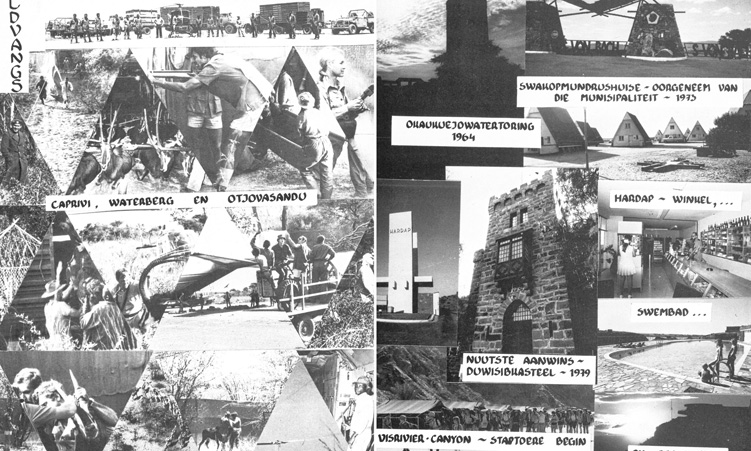
This year marks the 70th anniversary of the establishment of Nature Conservation and Tourism, which came into being in 1955, laying the groundwork for Namibia’s Ministry of the Environment and Tourism today.
Established by the South West Africa (SWA) administration of the time, it answered a need to earmark and develop significant areas for conservation and tourism.
Wildlife protection had until then been the responsibility of the South African Police and Bantu Affairs officials.
This came to a timely end and shifted from game conservation to the conservation of nature in general for the country.
It was only one year later, in 1956, that the SWA Parks Board replaced the SWA Game Protection and Hunting Board, the SWA Publicity and Tourist Association was founded, and an increasing number of tourists started to visit the country.
Nature Conservation and Tourism gathered momentum after this with many historical and natural monuments, like Brandberg, Waterberg, Mukurob Finger of God, Spitzkoppe, Fort Namutoni and the Quiver Tree Forest being proclaimed.
The year 1956 was also when Okaukuejo, Etosha’s first rest camp, was extended, and in 1957 Fort Namutoni was restored.
There was rapid development in the 1960s, fuelled by administrators Daan Viljoen and Wennie du Plessis.
This saw the proclamation of the Daan Viljoen, West Caprivi and Fish River Canyon game reserves, the Naukluft Mountain Zebra Park and the Cape Cross Seal Reserve.
Rest camps also opened during this period at Daan Viljoen (1962), the Hardap Recreation Resort (1964) and at Ai-Ais Hot Springs.
Etosha’s third rest camp, Halali, was built in 1967.
The momentum continued in the 70s, with the Skeleton Coast Park, Waterberg Plateau Park, Von Bach Recreational Resort and Gross Barmen Hot Springs being added and the Namib-Naukluft proclaimed.
On the Skeleton Coast, Terrace Bay was taken into commission and camping facilities were developed in the Skeleton Coast Park and the West Coast Tourist Recreation Area.
Towards the end of the decade, in 1979, the Duwisib Castle was purchased.
These early decades of development brought great changes for the country, attracting tourists and establishing tourism as a valuable asset.
The number of visitors to the resorts and game reserves increased dramatically.
From 1969, accommodation facilities such as guest farms and hotels were graded, and numerous private game farms were established.
Endangered wildlife species, like the blackfaced impala, mountain zebra and sable and roan antelope, were relocated to areas where they naturally occurred, and research centres were established.
The state-run protected areas have grown over the 70 years to now cover 17% of the country’s land surface.
This works hand in hand with Namibia’s Conservancy Programme established in 1996 after Namibian independence, a community-based natural resource management initiative enabling rural communities to manage their natural resources.
Simultaneously generating income and preserving wildlife, the conservancy programme is lauded as one of the most successful conservation initiatives in the world.
There are 86 communal conservancies to date.
These, together with state-managed protected areas and private nature reserves, amount to approximately 42% of Namibia’s land mass being under some form of protection (and 12 000km2 of its marine area), an incredible global accomplishment.
– Reference: ‘Nature Conservation and Tourism – 25 years’ (1980)