




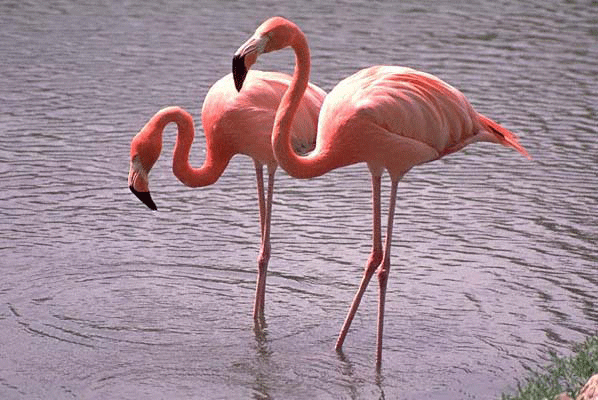
THE greater flamingo recorded the highest count at the recent summer bird count at Walvis Bay.
According to Peter Bridgeford of the Coastal and Environmental Trust of Namibia, the count was held on 3 and 4 February and greater flamingos surprised with a high count of 43 001 – the highest count in the past five years.
“The 35th year of the count started off with a bang. On Saturday we had 80 volunteers and on Sunday, 68,” he said.
“As expected, the lesser flamingo numbers are down. We found 6 036 (but in January 2010, we had even less, when only 2 617 were recorded).
“From Botswana, I received a mail and photo showing hundreds of thousands of flamingos in Sua Pan,” he said.
There have been a number of juvenile greater flamingos around for several months.
The most common wader, the curlew sandpiper (which spends our southern winter breeding in the high Arctic of Siberia), showed a surprisingly low count, with only 7 853 birds recorded.
However, there are probably another few thousand among the 14 165 “unidentified” small waders, he said.
“In February 2015, we had a total of 31 094.”
Pied avocet, easily identified and conspicuous, had the highest count for the past five years, with a total of 6 647. In January 2017, only 615 were seen.
The birds must be back from their successful breeding season inland.
Terns, the birds that can boost a count by 30 000 to 40 000, were noticeably absent.
With the seven species of terns found in the counts, only a total of 5 337 were recorded, with another 3 228 listed as “unidentified”. In January 2004, a staggering 38 000 terns – most of them common terns – were found.
Some interesting vagrants were sighted and for many of the volunteers, they were “lifers”– the first time they had seen these particular visitors to our coast. They included the American golden plover, common redshank, great knot, red phalarope and red-necked phalarope.
The sewage ponds are spread over a large area and it is difficult to count between the small dunes because there is water everywhere and nobody wants to walk in that water.
There were 2 449 lesser flamingos and of interest, is a glossy ibis which recorded 4 524.
The next bird count at Walvis Bay will be held on 4 and 5 August.
In an age of information overload, Sunrise is The Namibian’s morning briefing, delivered at 6h00 from Monday to Friday. It offers a curated rundown of the most important stories from the past 24 hours – occasionally with a light, witty touch. It’s an essential way to stay informed. Subscribe and join our newsletter community.

The Namibian uses AI tools to assist with improved quality, accuracy and efficiency, while maintaining editorial oversight and journalistic integrity.
Stay informed with The Namibian – your source for credible journalism. Get in-depth reporting and opinions for
only N$85 a month. Invest in journalism, invest in democracy –
Subscribe Now!