





“The United States is home to 5% of the world’s population, but 25% of the world’s prisoners.
Think about that,” said Barack Obama in a speech at the National Association for the Advancement of Coloured People (NAACP) conference in 2015.
A staggering figure that leads us on the trail of a compelling reassessment of where black people stand in America.
]At the time that Ava DuVernay’s documentary ’13th’ was made, African Americans constituted 2,3 million of the US’ total prison population of 6,8 million.
There is a murky history DuVernay leads us to discover in order to unearth this alarming statistic.
The American film-maker’s intelligence gleams brightly in this non-fiction film, as she investigates the systematic incarceration of black people in the United States through a reflective, conversational and meticulous ethnographic study of the American prison system, as an extension of a racist and corrupted capitalist democracy.
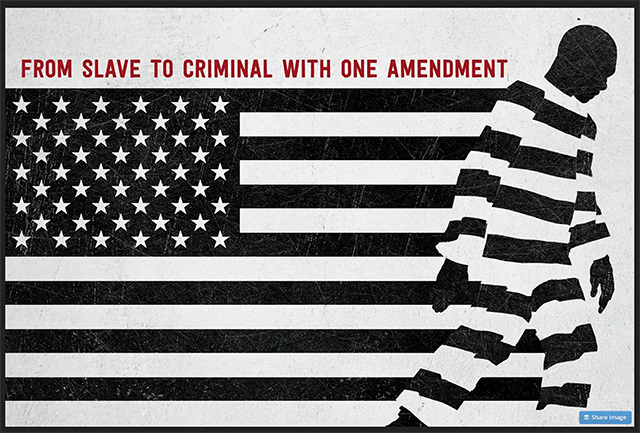
The name ’13th’ is inspired by a pivotal moment in the history of black people in America, as the abolishment of slavery and involuntary servitude was passed through the 13th amendment in 1865. It was an exciting time filled with prospects for the future and the hope of living the American dream seemed possible.
The amendment however had a special clause. “Neither slavery nor involuntary servitude, except as a punishment for crime whereof the party shall have been duly convicted, shall exist within the United States.”
The freedom of black people resulted in mass incarceration through crimes most black people didn’t even know they were committing. The clause would be the focal point for the documentary.
The mass imprisonment of black people after 1865 is revealed to have begun as a way to maintain the agricultural economy of the Confederate states. By convicting an African American for crimes against the state, the prisoner would be forced to work in hard labour and maintain the cotton farms in the American south.
Black people were convicted of minor crimes, such as loitering and malicious mischief. This in turn created a streamline for convict leasing, sending the newly freed slaves into a new type of slavery. Prison.
Years forward, a plague of crack cocaine and heroin hits black communities and destroys the families of thousands in the 1980s. President Reagan would launch his war on drugs and increase the sentencing for offenders. About two million people would go to prison. Ultimately this disrupted black homes and implicated the communities in various social problems relating to parenthood and gang membership.
The capitalist pursuits entangled with the prison system are explored by DuVernay. She pays particular attention to the presidency of Ronald Reagan in which his war on drugs led to the privatisation of prisons as the state found it financially strenuous to accomodate prisoners. State prisons were also getting crowded and there was a need for corporations to get involved. This is where the trouble would begin.
The documentary includes interviews with writer and academic Jelani Cobb, legendary civil rights activist and former Black Panther member Angela Davis, former House speaker Newt Gingrich and Harvard University professor Henry Louis Gates – who is renowned for his extensive research and recovery of African American literature.
The film is provocative and vigorous, as it sheds light on the social, economic and political impact of mass incarceration. A multi-dimensional trip with an axis pinpointing structural racism as the most toxic element of American society.

