




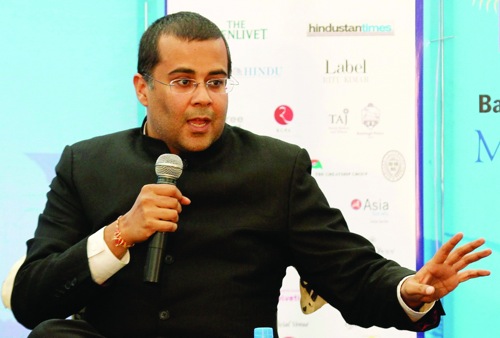
•Ankush AroraIndia’s biggest-selling author in English is often dismissed as persona non grata by literary critics, but that doesn’t faze Chetan Bhagat.
Ten years on as a professional writer, the banker-turned-author says he is better prepared to face criticism.
“I can dispassionately talk about it. It cannot bother me enough to disrupt me. But in the initial stages there were real moments of doubt,” Bhagat (40) told Reuters in an interview.
Through his plain prose, he has touched India’s young people, who see echoes of their lives in his stories of campus life, call centres, communal violence, marriage, and love.
‘Half Girlfriend’, Bhagat’s sixth novel, was launched in October. Its protagonist is from an impoverished Indian state. His lack of fluent English prevents him from blending in with the crowd in a cosmopolitan New Delhi, where he falls in love with a city-bred young woman.
Here are edited excerpts from the interview:
A: The flow of writing, technically, is much better than my first book. There’s a lot more confidence.
A: I cannot predict that. People still know ‘Five Point Someone’, which came 10 years ago. People still read it. People still allude to it. It wasn’t a quickie as people made it out to be that Chetan writes quickies. All the books have had some impact. Are they classics? No. But are they the absolute read-and-throw variety? No. They are somewhere in the middle. That’s where I want to be. I want to reach people and have a little bit of impact. Until it connects, how is it good writing?
A: They just may not be very proficient in their language. People mistake brightness with proficiency in English. English is a foreign language to us. There are vast portions of India which don’t have that. So they may just want a simple book in English. For them simple English is good enough. But to equate brightness, which means being intelligent, with being [good in] English, that is where the snobbery and elitism begins. And that’s where I have an issue.
A: Not just the middle class. The whole country suffers. I have seen it. Around this language, there is lot of inferiority. There’s a line in the book. He says, “My English is not that good. I have a Bihari accent.” He says French people have a French accent and it’s considered very sexy. So why is it? There’s an assumption of inferiority associated with the whole culture.
A: When my first few books came out, a lot of the literary community tried to dismiss me as somebody who is not serious or not a real writer. And you still find vestiges of that on Twitter … Popular fiction was not accepted when I started writing. It was not considered literature.
A: I thought maybe I don’t have it. Maybe it was luck. Maybe it was a fluke. But after three or four books, I thought that’s not true.
A: I am writing to reach Indians. Now if it fits into the Booker Prize, it’s fine. If it doesn’t fit, then what can I do about it? … It’s not a competition with other writers for me. I have to wean the young kids away from YouTube, from WhatsApp, from Candy Crush and make them read my book. – Nampa-Reuters
In an age of information overload, Sunrise is The Namibian’s morning briefing, delivered at 6h00 from Monday to Friday. It offers a curated rundown of the most important stories from the past 24 hours – occasionally with a light, witty touch. It’s an essential way to stay informed. Subscribe and join our newsletter community.

The Namibian uses AI tools to assist with improved quality, accuracy and efficiency, while maintaining editorial oversight and journalistic integrity.
Stay informed with The Namibian – your source for credible journalism. Get in-depth reporting and opinions for
only N$85 a month. Invest in journalism, invest in democracy –
Subscribe Now!