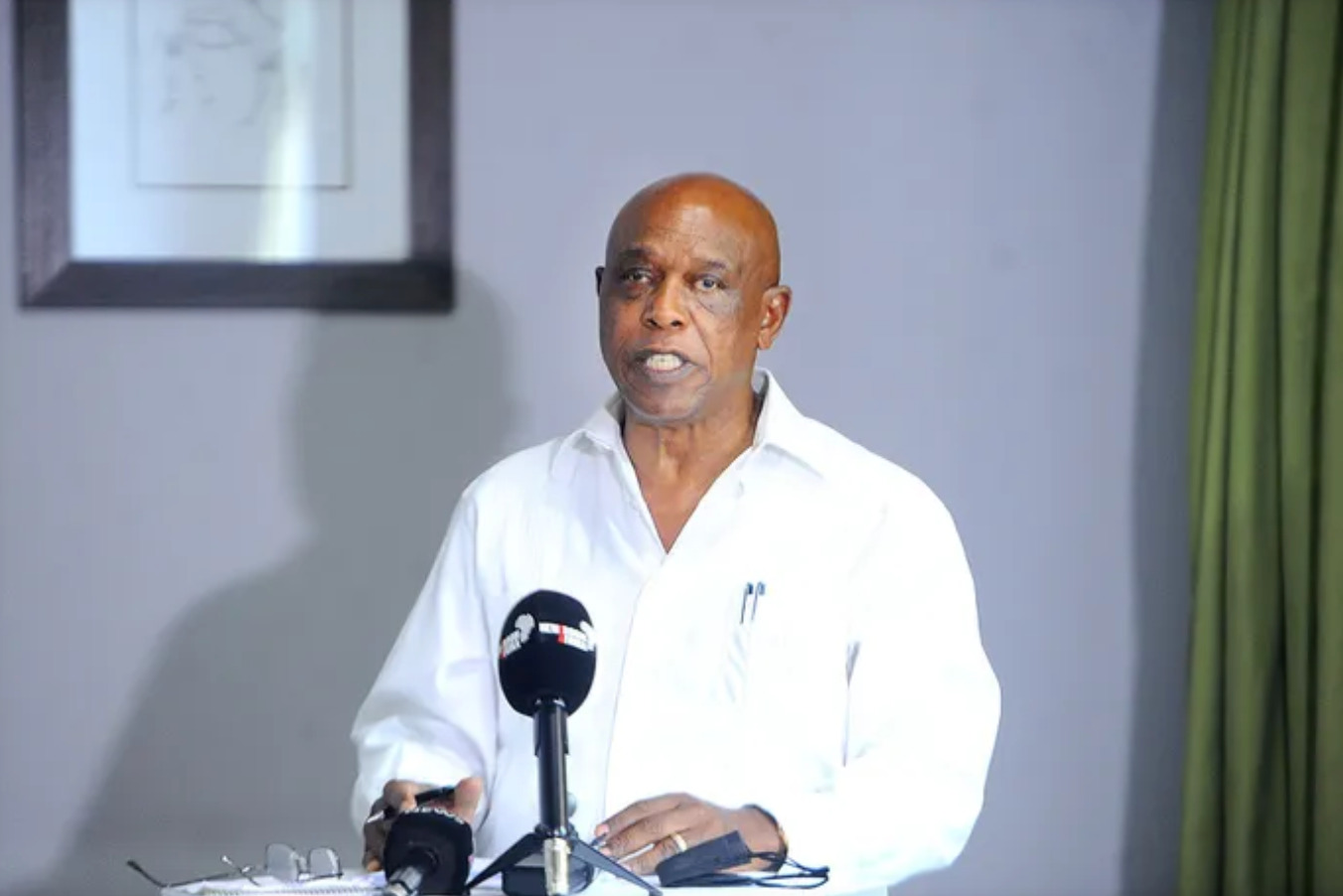





First gentleman Denga Ndaitwah has cautioned that Namibia’s Vision 2030 risks remaining an academic exercise if it is not aligned with the country’s socio-economic realities and implemented with genuine commitment.
Ndaitwah was speaking during a public lecture on strategic leadership and management hosted by the University of Namibia’s School of Military Science here on Tuesday.
The former chief of the Namibian Defence Force (NDF) said Vision 2030, which aspires to make the country an industrialised and prosperous nation by 2030, will remain an academic exercise if implementation does not match the realities on the ground.
Ndaitwah said some national goals were set without proper alignment to available resources and socio-economic conditions.
“When Vision 2030 was launched, for the defence force, it spoke of building a defence force that would be on par with the best in the Southern African Development Community, but there was no real commitment of resources to achieve that. Sometimes our plans look good on paper, but lack a practical foundation,” he said.
Ndaitwah said corruption remains one of the most serious threats to effective governance and national development.
The fight against corruption, he said, must be understood in its full context, noting that people often treat fraud and nepotism as separate issues when, in fact, they are all forms of corruption.
“Fraud and nepotism are not independent problems; they are all forms of corruption. You cannot list corruption alongside those acts because they fall under it. To fight corruption effectively, we must first understand what it truly encompasses,” he said.
He further called for realistic, measurable and specific policy implementation strategies that prioritise accountability and good governance.
“Policy formulation and implementation must be grounded in what is achievable. Otherwise, we end up producing documents that cannot be measured or evaluated,” he added.
Ndaitwah concluded by urging leaders to surround themselves with capable, ethical individuals who can translate national visions into tangible outcomes.