



Govt could end up pumping N$2.2 billion into Unam per year to achieve Nandi-Naidtwah’s plan
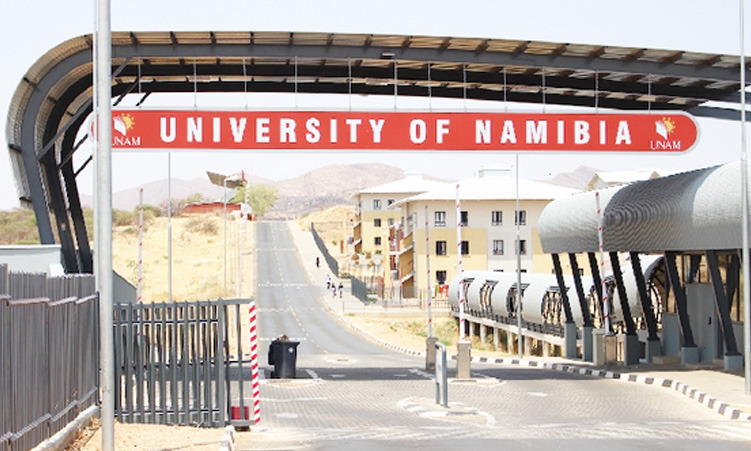
The University of Namibia (Unam) says it would need an additional N$850 million in government funding if tuition fees are abolished under the proposed free tertiary education policy.
This would increase the state subsidy to Unam from N$1.3 billion to N$2.2 billion, excluding the N$576-million subsidy to the Namibia University of Science and Technology (Nust) and student fees.
Minister of finance Ericah Shafudah on Tuesday during the midterm budget review announced that the government has allocated N$663 million to free tertiary education for registration and tuition fees.
Responding to The Namibian’s queries yesterday, Unam spokesperson Simon Namesho said the university is still waiting for detailed directives and funding modalities from the Ministry of Education, Innovation, Youth, Sport, Arts and Culture before it can provide a final figure on the cost of free tertiary education.
“During the 2025/26 financial year, a government subsidy accounts for approximately 64% of the university’s income, while 36% comes from student fees and other internally generated income,” Namesho said.
The 64% is equivalent to N$1.3 billion.
Namesho added: “Should tuition fees be removed, the university would require an estimated N$850 million in additional funding from the government to maintain current operations, standards, and service quality levels.”
He further said the university needs additional funding for infrastructure expansion, particularly for development, teaching resources and academic staffing.
“Without such support, there could be strain on lecture halls, laboratories, hostels, and on the workloads of both academic and administrative staff,” he said.
President Netumbo Nandi-Ndaitwah during her state of the nation address in March announced that Namibia would provide free tertiary education at public institutions starting in 2026, eliminating registration and tuition fees.
Education minister Sanet Steenkamp says the ministry has finalised the proposed framework for the roll-out of free education in Namibia, but official details are still to be made public.
Steenkamp yesterday told The Namibian that consultations had taken place involving key stakeholders, including the Ministry of Finance and the president.
“We have presented to the Ministry of Finance. We have also sat with the [ministerial] task force’s key members. We have sat down with her excellency (Nandi-Ndaitwah) and she gave her input, sent us back, and we have finalised what the inputs were,” she said.
‘BE PATIENT’
Steenkamp said the team presented different models and scenarios to the president, highlighting how the free education policy could be implemented and phased in across the country.
The minister urged the public to remain patient as two final steps remain before an official announcement can be made.
“We still have to present back to her excellency to update her on the guidance and input she gave us, as well as to present it to the Cabinet. After that, we can inform the nation,” she explained.
Steenkamp said the final meeting with the head of state is awaiting confirmation of a date.
Independent Patriots for Change parliamentarian Lilian Lutuhezi yesterday in parliament demanded clarity on the N$663 million allocated only to free tertiary education, covering only registration fees and tuition.
She said the free education subsidy by the government could cost about N$2.5 billion, and questioned whether the government has considered this.
“If we do not address this, we are going to have a situation again where registration and tuition fees are paid but students will drop out because of accommodation struggles and textbooks. So, how are we going to address this?” she asked.
‘NEVER ENOUGH’
Swapo backbencher Marius Sheya said whatever funds are allocated to the education sector will never be enough, given the sector’s numerous challenges.
“The government has done a good job to allocate N$663 million as promised for free tertiary education. This is just for the first quarter of 2026, and people should avoid jumping the gun too early,” he said.
The president of the Student Union of Namibia, Benhard Kavau, says the union is not convinced the government’s implementation of free tertiary education is financially viable or fair to all Namibian students.
“What we contest is that it is discriminatory towards Namibian students. Anything that benefits Namibians must benefit all, regardless of where they are studying,” he said yesterday.
He said the exclusion of students enrolled at private institutions from the free tertiary education scheme is unfair, especially given that all graduates will eventually contribute to the country’s economy and taxes.
Former finance minister Calle Schlettwein says free tertiary education could be financially viable in Namibia, but only under certain conditions.
“If free tertiary education means those with loans from the Namibia Student Financial Assistance Fund (NSFAF) will no longer receive non-tuition fees, then it is financially viable,” he said.
He said if NSFAF continues to grow as it has, and the entire free education budget is added to this, the government would spiral into unsustainable expenditure on education.
He said Namibia is among the top 10 spenders per student on education globally.