



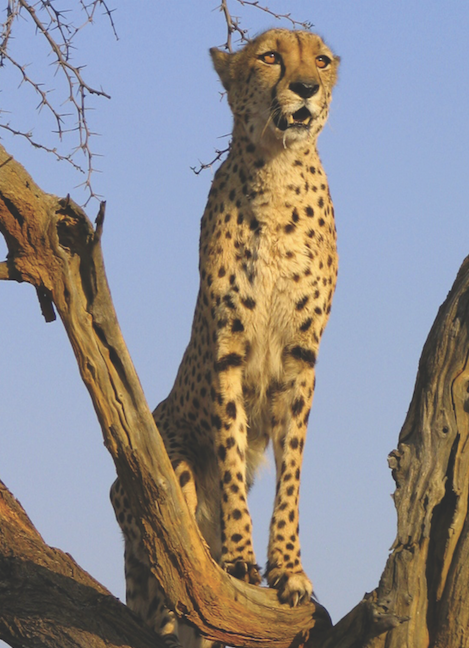
THE United States-based Smithsonian Conservation Biology Institute has published a study on cheetah conservation on how modern population declines have impacted the species’ genetic health.
Laurie Marker, founder and executive director of the Cheetah Conservation Fund (CCF), and Stephen J O’Brien, long-time CCF research collaborator, former CCF board chairman and currently director of the Dobzhansky Centre for Genome Bioinformatics at St Petersburg State University in Russia contributed research information to the new study.
The CCF is the global leader in research and conservation of cheetahs. With field headquarters in Namibia – ‘The Cheetah capital of the world’ CCF is dedicated to saving the remaining strongholds of cheetah populations in the wild.
The “Continued Decline in Genetic Diversity among Wild Cheetahs (Acinonyx jubatus) without further Loss of Semen Quality,” published 21 June in Biological Conservation, looked at the DNA of more than 100 male cheetahs in Namibia over the past 30 years.
The study revealed the world’s last stronghold of wild cheetahs is losing genetic diversity at an alarming rate. It also found, surprisingly, that wild and captive cheetahs have equally poor sperm quality, with only about 1 in 10 having what researchers consider to be ‘normal’ sperm quality.
“It is scary to chart a three-decade decline like this within the last large remaining wild cheetah population,” said Marker.
“This means each and every remaining animal has the ability to impact the species’ survival. It is imperative we maintain a healthy wild population of cheetahs in Namibia and elsewhere and capture genes of male cheetahs with good sperm, to introduce them and other beneficial traits to managed, captive populations.
“This underscores the need for CCF’s conservation programmes and makes our efforts to freeze and bank sperm in CCF’s Genome Resource Bank more crucial than ever”.
CCF has a long history of partnering SCBI on projects concerning the cheetah. SCBI researchers Adrienne Crosier and Pierre Comizzoli have played significant roles in cheetah reproductive research.
With Marker, Crosier developed methods to viably freeze and thaw cheetah sperm, and most notably, in 2007, with Comizzoli they produced the first in vitro cheetah embryo to survive to the blastocyst stage at CCF’s Applied Biosystems Conservation Genetics Laboratory in Namibia.
SCBI researchers also utilise CCF’s collection of biological samples in their work with captive cheetah populations in the United States.
At its headquarters in Front Royal, Virginia USA, SCBI maintains a cheetah breeding centre to support a genetically diverse and self-sustaining population. Since opening in 2007, 25 surviving cubs have been born.
The lead author of the study is Kim Terrell, former SCBI doctoral student and current director of research and conservation at the Memphis Zoo. Additional authors on the paper are Adrienne Crosier, David Wildt and Warren Johnson at SCBI and Nicola Anthony at the University of New Orleans.
Wildt and Crosier also serve as scientific advisers to CCF, and Crosier is the manager of the Cheetah Species Survival Plan (SSP) administered by the Association of Zoos and Aquariums, a plan Marker helped develop in the mid-1980s.
“Genetic health is essential for species survival”, said Wildt. “This is yet another example for the need to protect habitat as more range allows cheetahs to distribute their most valuable genes to sustain a healthy population.
“Cheetahs have already come back from the brink of extinction once in history. We don’t know if they can do it a second time. It is crucial that wildlife institutions continue to invest in methods to complement conservation efforts in the wild”, added Terrell.
On 18 October, Marker and a member of the SCBI team will present a joint lecture in Washington, DC, “Challenges in Cheetah Conservation,” to discuss their ongoing research partnership and the problems imperilling cheetah populations, including human-wildlife conflict, habitat loss and poor genetic health. The event is free and open to the public. Details will be posted soon at www.cheetah.org