





WHO GETS an award and who does not? I pose that question because of two issues that caught my attention recently.
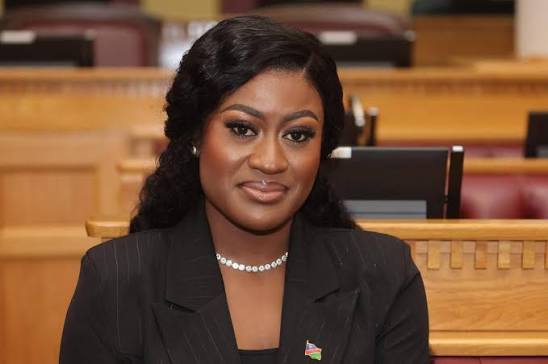
The first one was a decision by the University of Namibia which, last November, awarded Prime Minister Saara Kuugongelwa-Amadhila and businesswoman Martha Namundjebo-Tilahun honorary doctorates for their contributions to the country’s economic growth.
The Prime Minister was conferred an honorary doctorate in public finance, while Namundjebo-Tilahun received an honorary doctorate in business administration.
The second issue is when the First Lady, Monica Geingos, received the 2016 Dream Up, Speak Up, Stand Up (Dususu) award apparently for her contribution to gender equality and the education of the girl-child in Africa. The young Zuriel Oduwole said the reason they were giving the annual award to Geingos was because of the great work she had done in terms of youth development.
But what are the criteria for bestowing an honorary doctorate to an individual? Most public and private institutions of higher learning, recognise individuals who have made notable contributions to society by awarding them honorary doctorates as acknowledgement for their achievements that served a greater good.
Many universities have their own strict criteria for honorary candidates, but at top institutions an honorary degree may only be given to an individual with a sustained lifetime achievement, rather than for a single and short-term contribution. Thus, many institutions put more emphasis on the prolonged bearing of an individual’s accomplishment.
And I do not think both Kuugongelwa-Amadhila and Namundjebo-Tilahun satisfy those strict institutional criteria.
But those conferring the degrees said Kuugongelwa-Amathila was being recognised for outstanding work, such as being appointed the youngest ever National Planning director-general at the age of 26, as well as being the first and youngest finance minister and first ever female prime minister in Namibian history.
As for our entrepreneur, here is what Unam pro-vice chancellor for academic affairs, administration and research professor Osmund Mwandemele said: “Namundjebo-Tilahun has for a long time had a vision for Africa and at every available opportunity has been stressing the need for Africa to conduct successful business, as encapsulated in the slogan ‘By Africans for Africans’.”
But are those really sufficient grounds for a university to confer a doctorate? How about conferring an honorary doctorate to a minister of environment and tourism for protecting our fragile ecosystem or to a minister of safety and security for protecting us?
How about the Dususu award? The Dususu project recognises where a strong, measurable or successful support of education has been recorded in Africa by presenting candidates with awards annually.
And our First Lady scooped the award for 2016. I have known Geingos as a successful businesswoman and not an activist on the educational/political fronts. If any educational institution or an organisation was looking for a woman to honour by way of conferring an honorary doctorate or an award; then that person is, in my view, Ottilie Abrahams.
Abrahams, the founder and principal of Jacob Marengo Secondary School in Katutura, would say that the liberation struggle is far from over.
She firmly believes that education is key to the development of self-esteem and critical thinking, which she sees as the foundations of development but still lacking, years after independence in a country dominated for so long by apartheid and patriarchal rule.
It is, therefore, clear that Abrahams has always been fighting on a number of different fronts: political liberation, gender equality and education for all.
If one has to write about her political activism and involvement in various student bodies, civic organisations, both in South Africa and Namibia, and in political parties; then one will end up with a whole volume. And her involvement in the educational field is phenomenal.
Here are just some: She started the People’s Pre-Primary School at Rehoboth and the People’s Primary School in Katutura. She also acquired funding for a pre-school in Aroab and Grünau.
In 1985 she started Jacob Marengo Secondary School through the Khomasdal Civic Association.
All of these projects were based on the philosophy of a child-centred approach, teaching children critical thinking, participatory democracy and non-sexism to counteract the effects of the Bantu education system.
And Abrahams was instrumental in the development of that concept which was tabled and thoroughly discussed during the Beijing Women World Conference in 1998. The Namibian Child Girl Organisation came as result of that.
But it appears that awards and honours are given to the powerful and famous. For example, Geingos is the third first lady to receive the Dususu award.
But as they say many universities/institutions also expect a sizable donation from honorary degree recipients. How cynical…