




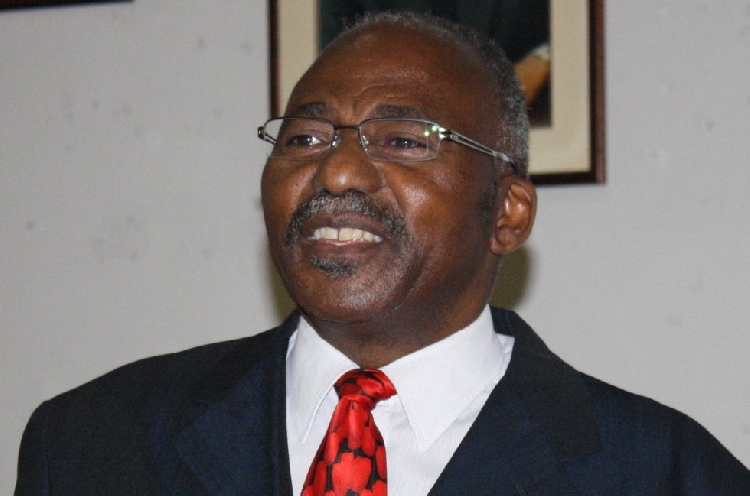
THE National Assembly Speaker says the cost of constructing the new parliament escalated from N$640 million in 2014 to the current N$2,2 billion to accommodate the National Assembly and the National Council.
Peter Katjavivi also blamed the high cost on the weakened rand/Namibia dollar.
The 2016 to 2017 development budget tabled in the National Assembly last week allocates N$2 billion for the construction, renovation and improvement of the new parliament building, while the other N$260 million is for feasibility study, design and supervision.
“It is, therefore, logical that the construction of a new parliament building that would accommodate both houses is likely to cost a little more than it was originally conceived when the new building was going to house the National Assembly alone,” he said in a statement issued yesterday.
By paying little more, Katjavivi actually meant roughly N$1,6 billion on top of the initial N$640 million planned for two years ago.
Katjavivi said the global economic turmoil had a negative impact on the rand and the Namibian dollar that weakened against the US dollar.
“Given the drastic weakening of our national currency, it follows that the original amount that was budged in the 2015/2016 financial year is likely to go a bit higher,” he said.
The construction of the new parliament, Katjavivi said, would also involve a lot of international transactions in terms of dealing with different suppliers.
“However, in the near future, the rand/Namibia dollar may gain value, and that would definitely have a positive impact as far as the cost of this project is concerned,” he noted.
The project is still in its infancy since government only spent around N$20 million last year. The government plans to spend N$12 million this year, and another N$43 million next year.
Like many other mega projects, the tender for the new parliament could be one of those that will ignite a scramble among well-known business groups and their cartels.
Lawmakers usually get what they want. News about the new parliament comes a few years after the government splashed N$300 million to renovate the National Council buildings. Those lawmakers do not want that building anymore.
As for the National Assembly, the current development budget shows that the state has up to now paid N$48 million to renovate the current building, which MPs want to vacate for a new one.
reported last year that works minister minister Alpheus !Naruseb warned that government could end up forking out around N$1 billion for the proposed new parliament building since the project will cost N$800 million, excluding consultancy fees.
It appears that was a hint for an upcoming N$2,2 billion bill, which might even go up to N$3 billion since some state officials have made it a habit of inflating state tenders to cater for other needs.
The decision to expand the new parliament cannot be detached from President Hage Geingob who championed the Constitutional amendments in 2014 when he was Prime Minister.
The changes to the law meant that the National Assembly would consist of 104 members instead of 78, while the National Council increased from 28 to 42 members.
Geingob announced during the opening of parliament last month that the issue of a new parliament was for the MPs to discuss.
Instead of debating the issue, Prime Minister Saara Kuugongelwa-Amadhila and a small group of ruling party politicians blocked Swanu president Usutuaije Maamberua from continuing his motion on the need to build a new parliament building.
Kuugongelwa-Amadhila and other Swapo politicians were not happy about Maamberua’s suggestion of getting rid of the National Council, or removing ministers from the legislature.
Katjavivi, who is supporting the new N$2,2 billion parliament, also blocked Maamberua from speaking in what some lawmakers construed as being biased in favour of the ruling party.