



• ABSALOM SHIGWEDHA in ZANZIBARA SENIOR professor at the University of Dar es Salaam has warned that greenhouse gas emissions are heating up the ocean, resulting in reduced marine life.
Paul Onyango, from the school of aquatic sciences and fisheries technology said this at a four-day media training workshop on enhancing sustainable fisheries and aquaculture development in Africa, held in Zanzibar recently.
Onyango said when the ocean heats up, it negatively impacts marine biodiversity.
“Ocean biodiversity provides food, promotes human well-being and cultural heritage, and supports sustainable livelihoods,” Onyango said.
He said another environmental factor leading to a decline in terrestrial water bodies is over-fishing.
This was found by a study done on Lake Tanganyika.
Onyango urged the media to improve reporting on the problem of illegal, unreported, and unregulated fishing in Africa as it is becoming a major hazard.
According to the African Union’s New Partnership for Africa’s Development (Nepad), increasing demand for international markets or fish is driving fish capture beyond sustainable levels, further straining the already weak capacity of African institutions to manage their fisheries resources.
This in turn leads to illegal, unreported, and unregulated fishing on the continent.
Andrew Baio from the University of Sierra Leone said the average annual landed value of the global small-scale fisheries catch between 2013 and 2017 was estimated to be almost US$77,2 billion.
This estimate, he said, is equivalent to 57% of the average total global landed value from captured fisheries of US$134,4 billion, as estimated by the Food and Agriculture Organisation (FAO).
Baio said an estimated 120,4 million people were employed in capture fisheries in 2016, and small-scale fisheries accounted for 93% (113 million people) of this.
Of these 113 million people, an estimated 60,2 million were employed part or full-time across all segments of the value chain.
“Together, Asia and Africa account for 94% of those estimated to be employed in small-scale fisheries,” said Baio.
The workshop was part of the African Union’s Fisheries Governance project II (Fish Gov 2), supported by the European Union, and was aimed at promoting understanding and awareness of the main challenges and opportunities in the sector, as well as critical continental policy instruments for fisheries and aquaculture in Africa.
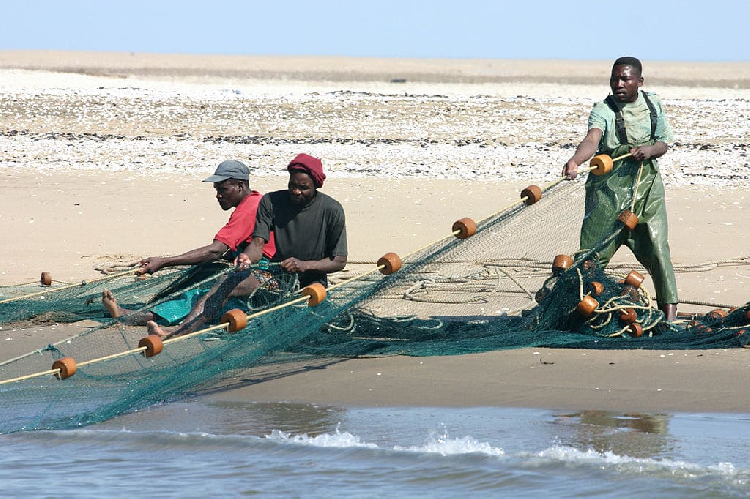
In Namibia, efforts are underway to develop a national plan of action for Namibia’s small-scale fisheries.
In September last year, the Ministry of Fisheries and Marine Resources committed itself to implementing voluntary guidelines for securing sustainable small-scale fisheries in Namibia in the context of food security and poverty alleviation, with the ultimate goal of developing a national plan of action for the country.
The FAO in Namibia is providing technical capacity and implementation support for developing this plan through a framework for small-scale fisheries guidelines.
The Marine Resources Act and the Inland Fisheries Resources Act recognise artisanal and recreational fishing, but are silent on and do not include small-scale fisheries.
As a result, information and data on small-scale fishing has remained poor, rendering the roles of those who fish invisible.
It is estimated that small-scale fisheries play an important role in the daily lives of over 40 000 Namibians.
The project will be implemented in all 14 regions of Namibia.