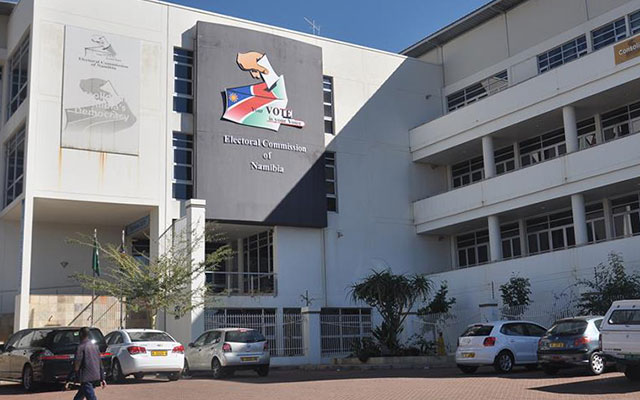
THE Electoral Commission of Namibia has been told to reform the law regulating donations to political parties as the current guidelines were vague and “meaningless”.
All political parties registered with the ECN are required under the Electoral Act to publicly disclose donations from local and foreign donors.
Although this provision was passed in 2014, regulations guiding its implementation were gazetted for the first time at the end of last year only.
These regulations limit public donations to political parties to N$4 million for local and N$2 million for foreign donors.
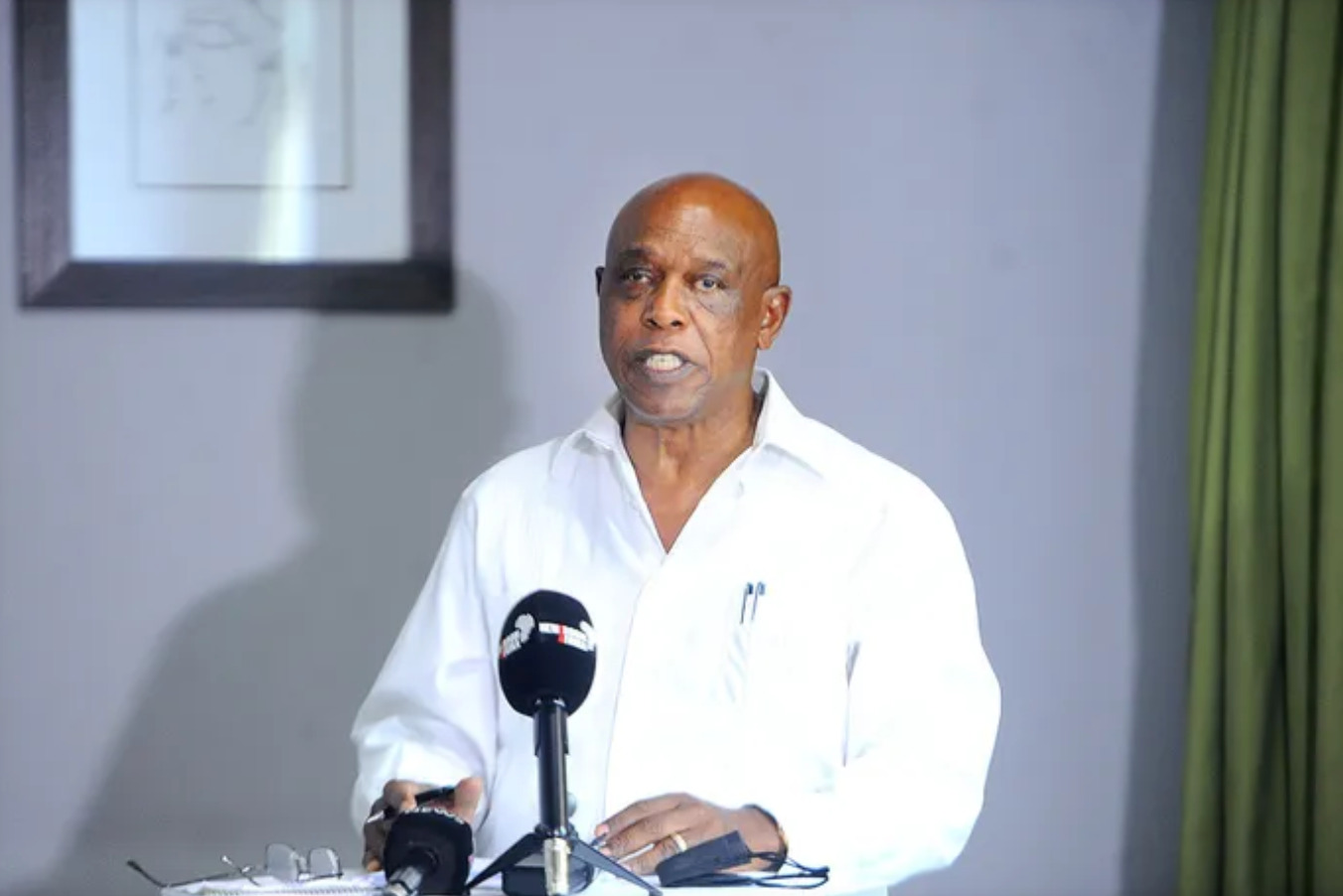
Graham Hopwood, executive director of the Institute for Public Policy Research (IPPR) says the current regulations, which were gazetted late last year, will not improve transparency and accountability.
Hopwood says the “whole world of political finance remains a murky one”.
He says the current guidelines are meaningless in terms of transparency and accountability.
The language used by the ECN to determine the limit of donations is vague and can easily be manipulated by political parties, he said.
“Does it mean that the N$4 million for local donors and N$2 million for foreign donors is the total donations that a political party can get? Or does it mean that political parties can get as many donations as long as donors keep the amount below the N$4 million and N$2 million set by the ECN? Elections are expensive by nature and if N$4 million for local donors and N$2 million for foreigners is the total limit, it serves no purpose,” Hopwood says.
He therefore said Namibia needs a new, rigorous system to regulate donations to political parties, which should require all donations above a certain amount, for instance N$5 000, to be listed and declared publicly.
“That is why the IPPR has called for the complete reform of party-political finance in Namibia,” he said.
The ECN’s chief electoral officer, Theo Mujoro, yesterday appeared to be confused whether the Commission’s regulations set a prescribed limitation on how much political parties can get through donations.
On the one hand Mujoro said: “In terms of the Electoral Act, 5 of 2014 and the regulations issued on 18 November 2019, there is no “prescribed limitation” on the amount of donations any political party may receive”.
On the other hand, Mujoro said: “The act and the regulations clearly state that any registered political party or registered organisation, any member of a registered party or registered organisation or any other person may receive up to the amount of N$ 4 million from a Namibian person or a Namibian institution and N$ 2 million from a foreign person or foreign institution and they must disclose such donation to the Commission”.
Mujoro, however, said the ECN has the power to cancel the registration of political parties and registered organisations that contravenes the donations provision.
Hopwood’s comments come at a time that Swapo is linked to allegations that its political campaigns have been funded by donations linked to the Fishrot corruption scandal.
President Hage Geingob at a media event on Sunday denied these claims, saying the party did not receive a penny from the Fishrot scandal.
Swapo’s press conference comes a few days after Anti-Corruption Commission investigator Willem Olivier testified in court that the N$17,5 million from state-owned Fishcor that was paid into the law firm Sisa Namandje & Company’s account was used for a Swapo election campaign.
The payments were made in 2015 and 2017, respectively.
Geingob at the Sunday event said the party was under no obligation to publicly disclose the funds it received through donations over the years.
On Swapo’s position regarding the Fishrot scandal, Hopwood says the president’s briefing left key questions hanging, “particularly concerning indirect payments that may have been made regarding the 2017 party congress”.
“The party’s official books and accounts may be in order, but the public’s concerns are focused on payments that could have circumvented the party’s official accounts by using unofficial accounts such as lawyers’ funds or individuals’ bank accounts,” he says.
He says Swapo’s leadership should not pretend that the criticism directed to the party emanates from a small cabal of people who want to see Swapo damaged.
Swapo has undermined its own credibility by adopting a defensive approach to the issue, he says.
Rui Tyitende, a political science lecturer at the University of Namibia, says he was disappointed by the president’s comment that individual Swapo members implicated in the Fishrot scandal where not the party.
“Those individuals acted on behalf of someone when they acted dubiously in this Fishrot saga. The moral thing to do is to apologise to the workers who lost their jobs because of this economic terrorism, and find ways to accommodate them as promised,” Tyitende says.
Iivula-Ithana said the party has its own instruments to guide members in terms of soliciting public donations.
“Swapo worked on that document a long time ago. The rules and procedures in electing party members, that document, if you read it, you will find all kinds of prohibitions. How we should elect ourselves. And to think that we conducted ourselves in such a manner just because there were no rules, it is not true. The rules are there, but all the rules were discarded,” she said.