PARIS – AFP Sports leading deaths of the year:
AMERICAN FOOTBALL
Ralph Wilson
Owner of the Buffalo Bills since founding them in 1960 and a driving force behind what became the Super Bowl died aged 95 on March 25. Bought the Bills for $25000 in 1959, they were valued by Forbes magazine last year at $870 million. He was elected to the Pro Football Hall of Fame in 2009. His greatest impact was in bringing together the flashy upstart AFL and the NFL to create the Super Bowl and usher in the modern gridiron era, helping guide the league’s rise into America’s most popular sports league. Sadly for him his vision was not rewarded with the trophy itself despite his hugely-talented but temperamentally suspect Bills reaching four successive Super Bowls in the 1990’s and losing on every occasion – the only team ever to do so on both counts.
ATHLETICS
Chris Chataway
British athletics great best known for being one of the pacemakers for Roger Bannister’s landmark four-minute mile run in 1954, died aged 82 on January 19. Chataway, who was knighted by Queen Elizabeth II for his services to the aviation industry, had a stellar year in 1954 when he also broke the 5,000 metres world record. For that achievement and for his role in Bannister’s remarkable effort it was he and not Bannister who was named the first-ever BBC Sports Personality of the Year. Later became successful journalist and was also a Conservative MP and achieved ministerial office twice.
Mbulaeni Mulaudzi
Outstanding South African 800 metres runner whose crowning glory came with the world outdoor title in Berlin in 2009. Died in a car crash aged 34 on October 24. Described as a true hero by South African president Jacob Zuma among many other medals he won Olympic silver in 2004 where he was also given the honour of being the flagbearer. He had barely had time to enjoy retirement having hung up his spikes in 2013. “Just lost a brother, a friend, a very good friend,” tweeted Caster Semenya, who completed a double for South Africa in the 800m in Berlin by winning the women’s title. “May your soul rest in peace. I love you man, will always love you CHAMP.”
Miloslava Rezkova
Surprise Czechoslovakian winner of the women’s high jump Olympic gold in 1968 died at the age of 64 on October 19. She also won European gold in 1969, and married her coach Rudolf Hubner a year later. Rezkova, also declined a marriage proposal from a Greek millionaire, who offered her an island in the Aegean Sea as a wedding present.
CRICKET
Gary Gilmour
Colourful character nicknamed ‘Gus’ enjoyed a limited international cricket career for Australia despite being a very talented all rounder. Died aged 62 on June 10. Played 15 tests – though Don Bradman remarked to him ‘that if I was a selector you’d never play for Australia. You eat too many potatoes’ – and five one day internationals. The 1975 World Cup was his finest moment as he took six wickets for 14 runs in the semi-final victory over England and then five for 48 in the final against the victors West Indies. Never the healthiest of men he had a liver transplant in 2005. Also lost a son Clint to a brain tumour aged just 33. “He was at the front of the queue when they were handing out talent, but unfortunately he was right at the back of the queue when they handed out health and good luck,” said his captain Ian Chappell, who led the fundraising for the liver transplant, after his death.
Phillip Hughes
Australian batsman who died on November 27 just days away from his 26th birthday and provoked an outpouring of grief in a country where those who earn the right to wear the green baggy cap are idolised. Hughes died from a head injury inflicted when a bouncer by Sean Abbott struck him in the neck. In all he played 26 tests with his most memorable his second against South Africa in 2009 scoring a century in each innings to become at the age of 20 years and 96 days the youngest player to achieve such a feat. Australian Prime Minister Tony Abbott led the many tributes. “Phillip Hughes was a young man living out his dreams. His death is a very sad day for cricket and a heartbreaking day for his family. What happened has touched millions of Australians. For a young life to be cut short playing our national game seems a shocking aberration.”
FOOTBALL
Alfredo di Stefano
Real Madrid legend considered one of the greatest footballers ever, died aged 88 on July 7 after lapsing into a coma following a heart attack. Nicknamed the ‘Blonde Arrow’ he played for both his native Argentina and then his adopted country Spain but like another superstar George Best never got to play on the biggest global stage the World Cup finals. However, on the club front it was a different matter playing for Real Madrid for 11 seasons between 1953 and 1964, winning five European Cups and being named European player of the year on two occasions (1957 and ’59). “Alfredo Di Stefano changed the history of this club and he changed the history of football,” said Real’s chairman Florentino Perez.
Albert Ebosse
Algeria-based Cameroon striker died aged 24 on August 23 as result of injuries received during or after a game for his club JC Kabylie for whom he was leading scorer the preceding season. While the official Algerian version is that he died from being struck on the head by a piece of slate thrown from the stands a Cameroon pathologist, paid for by the family, has alleged he died as a result of a beating he took in the changing rooms.
Eusebio
Portugal’s greatest player and an inspiration to many including Cristiano Ronaldo. Died aged 71 from cardio-pulmonary arrest on January 5. Revered as the ‘Black Panther’ for his remarkable skills he was born into poverty in the then Portuguese colony of Mozambique and went on to score 733 goals in 745 matches. It was at Portuguese giants Benfica he established his reputation. In 1962 he scored the crucial goals in a 5-3 victory over Real Madrid in the European Cup final and in 1965 he was awarded the Ballon d’Or. “I was the best player in the world, top scorer in the world and Europe. I did everything, except win a World Cup,” Eusebio said in 2011, recalling his tears after Portugal’s loss in the 1966 World Cup semi-final to England. Tens of thousands of Portuguese lined the streets of Lisbon despite the driving rain to watch his funeral cortege pass by while it was also broadcast live on television.
Tom Finney
A dashing player for Preston North End and England and regarded as the equal of his contemporary, Stanley Matthews died aged 91 on February 14. Nicknamed the ‘Preston Plumber’ because his father insisted he finish his apprenticeship, he served in World War II in the Desert and Italy. On returning from duty he scored 210 goals in 473 appearances for Preston. He also represented his country on 76 occasions, including at three World Cup finals, scoring 30 goals. Apart from a Second Division (now the Championship) title, Finney never won one of football’s major honours, ending up on the losing side in an FA Cup final and twice runners-up in the First Division (now the Premier League). The late Bill Shankly, the legendary Liverpool manager who played with Finney at Preston, said of him: “Tom Finney would have been great in any team, in any match and in any age… even if he had been wearing an overcoat.”
Klas Ingesson
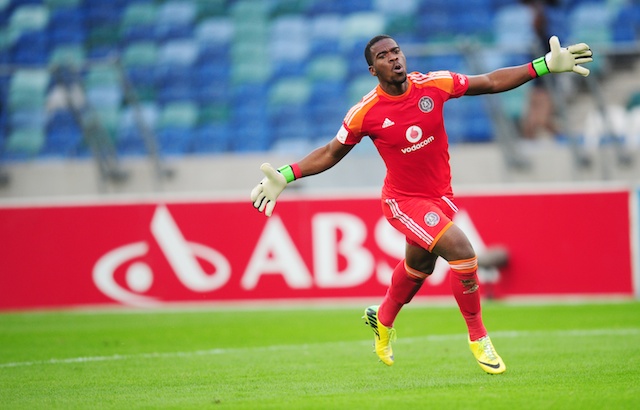
Senzo Meyiwa
South African and Orlando captain and goalkeeper aged 27 shot dead by intruders at his pop singer girlfriend’s house in a township near Johannesburg on October 26. Irvin Khoza, the chairman of the Orlando Pirates, for whom Meyiwa played, said: “This is a sad loss to Senzo’s family especially his children, to Orlando Pirates & the nation.” Meyiwa had been in outstanding form for club and country, starring for the latter in the 2015 Africa Cup of Nations qualifiers where he kept four successive clean sheets to set up Bafana Bafana nicely to eventually qualify after his death. Replacement goalkeeper Darren Keet sported a moving, handwritten quote from The Bible on his gloves for the qualification-clinching victory over Sudan in Durban: “There is no greater love than to lay down one’s life for one’s friend.”
Tito Vilanova