




Full Story
LAC takes Otavi to court
THE Legal Assistance Centre (LAC) intends to take the Otavi Municipality to court for allegedly failing to adequately service the town’s informal settlement residents.
The LAC – representing the community members of Otavi’s informal settlements – says that during consultations with community members this year, it witnessed that municipal facilities are in a “deplorable state”.
“Water in the toilets, built to service the more than 4 000 residents, has been turned off. Instead, people have used the entrance and surrounding area of the toilets to relieve themselves, leaving a pool of human waste surrounding the area,” reads a statement by the human rights law organisation.
Residents say that the waste – worse during the rainy season – “flows with the water into our yards”, and that those most affected are the children and the elderly.
The LAC says the situation is so dire that community members are affected by diseases such as malaria and cholera.
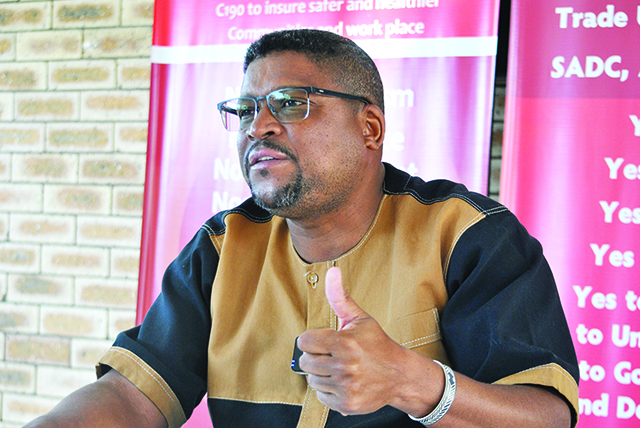
LAC Director Norman Tjombe says the situation is unacceptable, and all Namibians should have access to fair public service, proper housing and safe living conditions.
“This is really about fundamental freedoms – the right to dignity, the right to safety and security, and the right to non-discrimination based on socio-economic status,” Tjombe said.
Otavi Village Council CEO Ernst Gaoab says the Council is yet to pronounce itself on the LAC’s announcement – which it says it has only read about. He adds, however, that the Council intends to consult the community members to find a lasting solution to the issue at hand.
“This matter has been taken out of proportion... and has even been overemphasised in the papers saying there is no political will,” Gaoab said.
“We will get back to the community, sit with them, and see what the problems are, including what it is that they should be doing in order to be part of the solution,” the CEO added.
He expressed disappointment that people only focused on the problems, but didn’t report on the things the Council had been doing to rectify these problems.
“Our people are cleaning there every day, but there are still these problems. So we need to look at what is lacking in the solution, and they (the community) need to bring their side also,” he said.
Gaoab further said that the Council was finding it increasingly difficult to deal with the influx of people into the informal settlements.
“The system can’t cope,” he said.
Gaoab said community education would have to form part of any solution.
“For example, it could be that they are flushing the wrong things down the drain”, he said.
“Some are saying that the Council is turning a blind eye, but this is not the case.”
But the LAC says in its statement that the failure to provide adequate water and sanitation has been long running.
It points out that the Ombudsman investigated conditions at Otavi’s informal settlements in November 2007.
“A report was then submitted to the Ministry of Regional and Local Government and Housing, the regional health directorate in Otjiwarongo and the Otavi Village Council. In 2008, a reassessment was done by the team of the Ombudsman. The obligation of the Village Council was not fulfilled, the Ombudsman’s report stated.”
The LAC plans to finalise its court application this month, and to file it in January next year.
nangula@namibian.com.na