


Full Story
Africans acknowledge ‘democracy deficits’
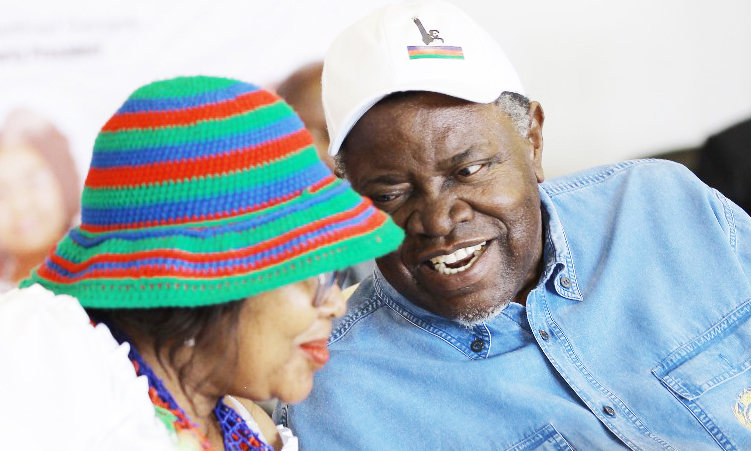
By: CATHERINE SASMANREPRESENTATIVES of the Africa Committee of the Socialist International that met in Windhoek last week said that social democracy is increasingly on the agenda of African countries.
Chairperson of the committee, Ousame Tanor Dieng of Senegal, ascribed the north African democratic movements’ “explosions of anger” due to “popular disillusion and aspirations for freedom” and a clamour for resources which are unequally distributed.
Dieng said democracy in Africa is struggling to take root in many countries on the continent because of the failures of election systems.
He said there is “serious reason to worry” over the “liquidation of democracy”, saying some African leaders have a “habit of manipulating constitutions and laws” to remain in power.
Dieng said there must be respect for electoral processes and structures, and consensus on elections, as well as the role played by international and regional communities.
There will be no less than 20 legislative and presidential elections in Africa next year, and the African Committee of the Socialist International meeting agreed that it is necessary to create in all these countries an atmosphere of calm to allow voters to enjoy their civic rights, failure of which would lead to failed states in breach of peace.
Swapo Party Secretary General Pendukeni Iivula-Ithana said Africa should be concerned about service delivery and the improvement of the lives of its citizens, especially those in rural and peri-urban areas.
“This is what the former liberation movements are concerned about in general in southern Africa, notably in the context of the MPLA of Angola, Frelimo of Mozambique, CCM of Tanzania, ANC of South Africa, and Zanu-PF in Zimbabwe,” said Iivula-Ithana of the ruling parties in these African countries.
Former liberation movements in southern Africa will meet in August, which Iivula-Ithana said would discuss the improvements of livelihoods in the region.
“Despite the challenges of regime change here and then, we shall remain strong and continue to forge our struggle for the economic and financial liberation,” she said.
The world, said Iivula-Iithana, is more vulnerable, and more so for Africa, adding that there was an increased militarism and aggression towards weaker nations, while there is an increased scramble for mineral and energy resources, and “increased global policing under the pretext of defending human rights”, clearly referring to Nato’s military intervention in Libya.
“Perhaps the Africa Committee should take a leaf from the meeting of the former liberation movements which resolutions are easily finding its way into the platform of the SADC” Iivula-Ithana suggested.
The meeting attended by 60 of its members on the continent agreed that Africa should be made a permanent seat on the United Nations Security Council.
Members also called for the speedy attainment of independence in Western Sahara.
The committee further decided to have a deeper discussion on drug trafficking, money laundering and terrorism, and other scourges which negatively affect the development of African countries.
Of the member organisations at the meeting, conspicuous in their absence was Namibia’s Congress of Democrats (Cod).